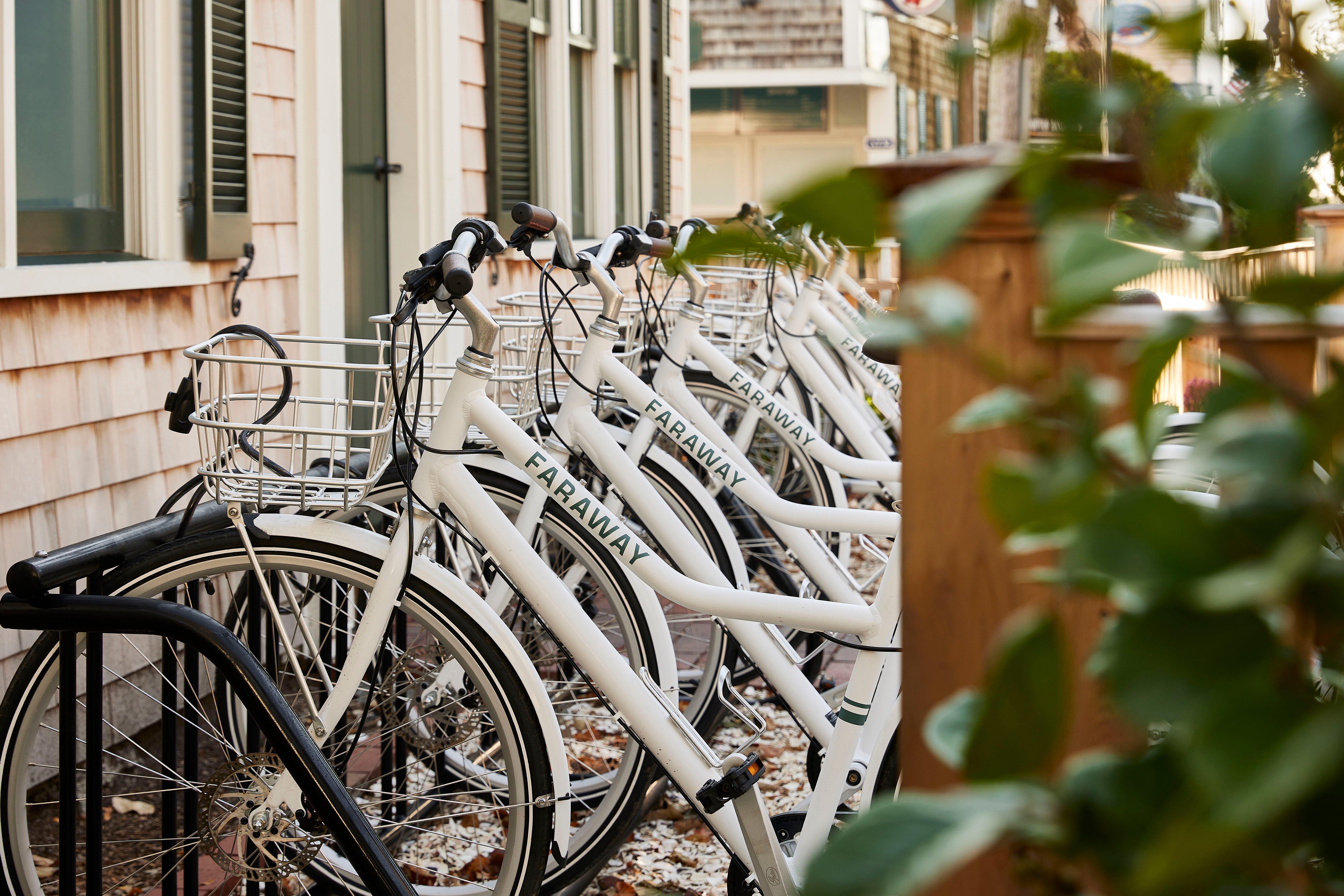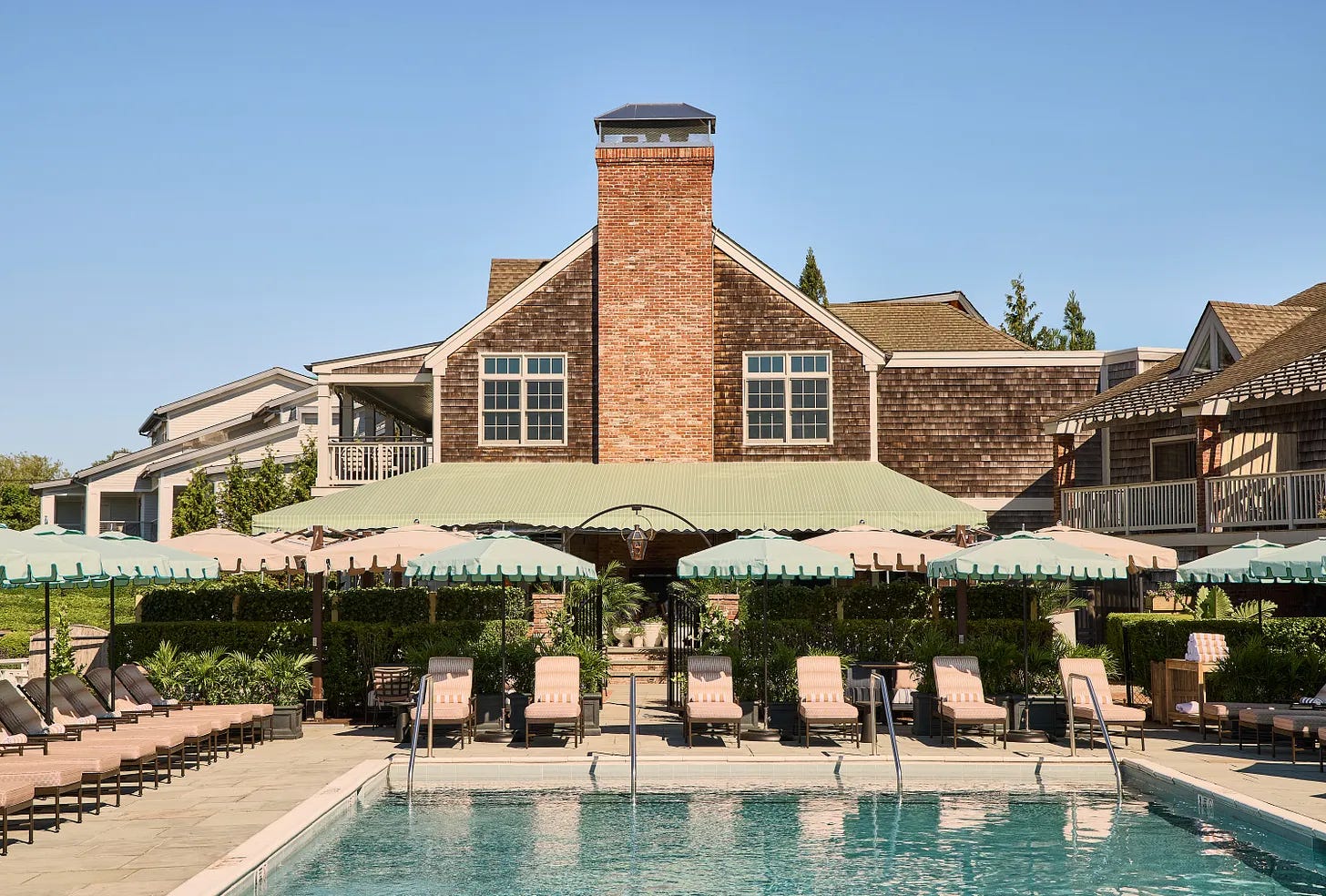
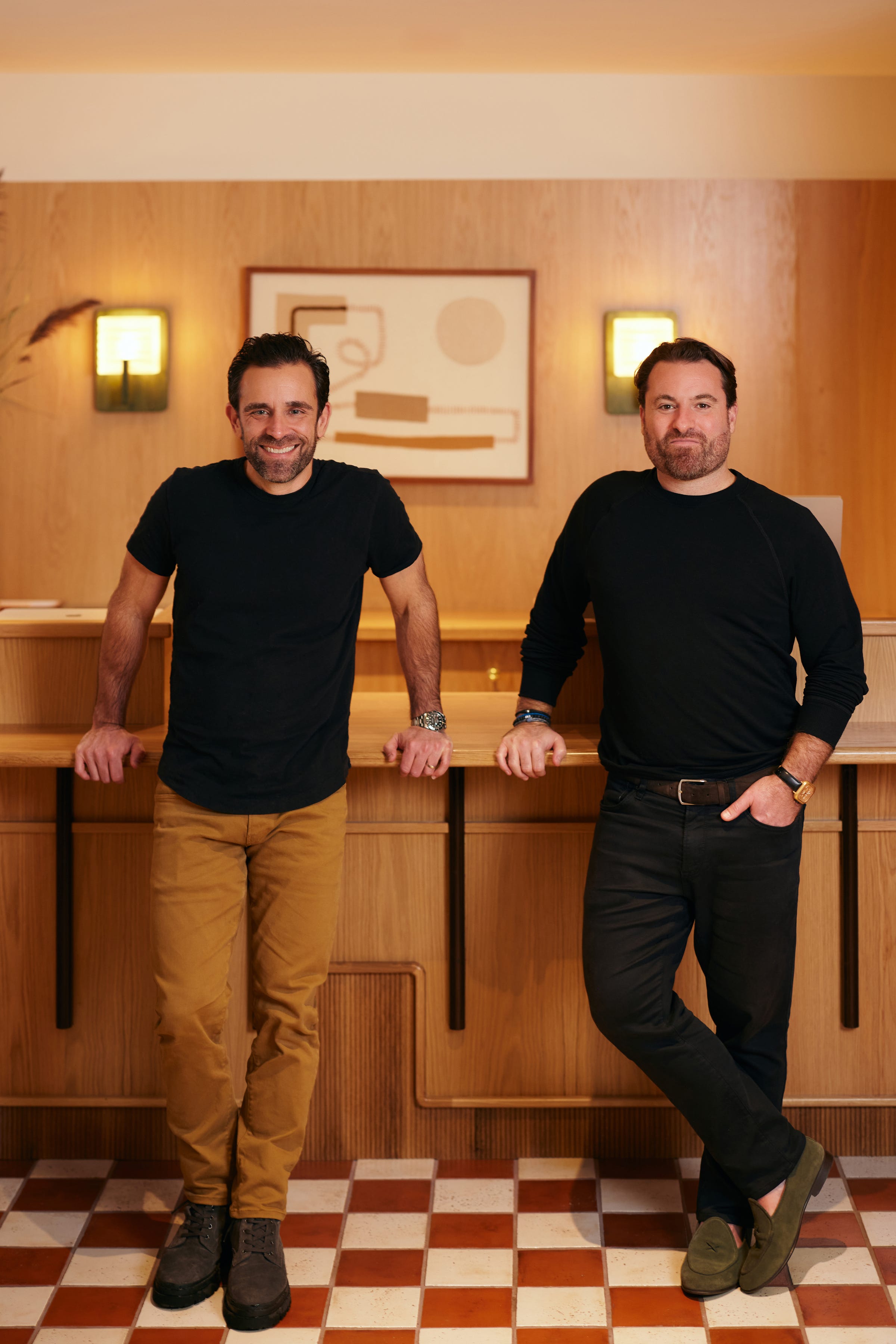
A lot of new hotel brands have been popping onto my radar recently, but the one that’s grabbed my attention most is Faraway. The portfolio, developed by Brad Guidi and Jason Brown, co-founders of Boston-based Blue Flag Capital, ambitiously opened two new properties both in the month of June. While the brand name might suggest locations in far-flung locales, the duo have instead been rehabbing properties in legacy leisure destinations and creating a “faraway vibe.” On the East Coast, they’re making a name with properties in the beloved coastal towns of Nantucket, Martha’s Vineyard, and now Sag Harbor. And they chose Jackson Hole as the first mountain town to plant a Faraway flag.
When I visited Faraway Jackson Hole back in early July to review the property for Conde Nast Traveler, the hotel reminded me of another brand I admire, Life House Hotels. It turns out, Blue Capital owns Life House (though they’re now managed by Lark Hotels) and Jenny Bukovec Studio is behind the interiors of both brands. I immediately saw similarities in the way a story of place is woven into the hotel design. Like Life House, the design narrative of Faraway properties is built around a fictional character; Jackson’s is a first-generation rancher named Hattie Quinn.
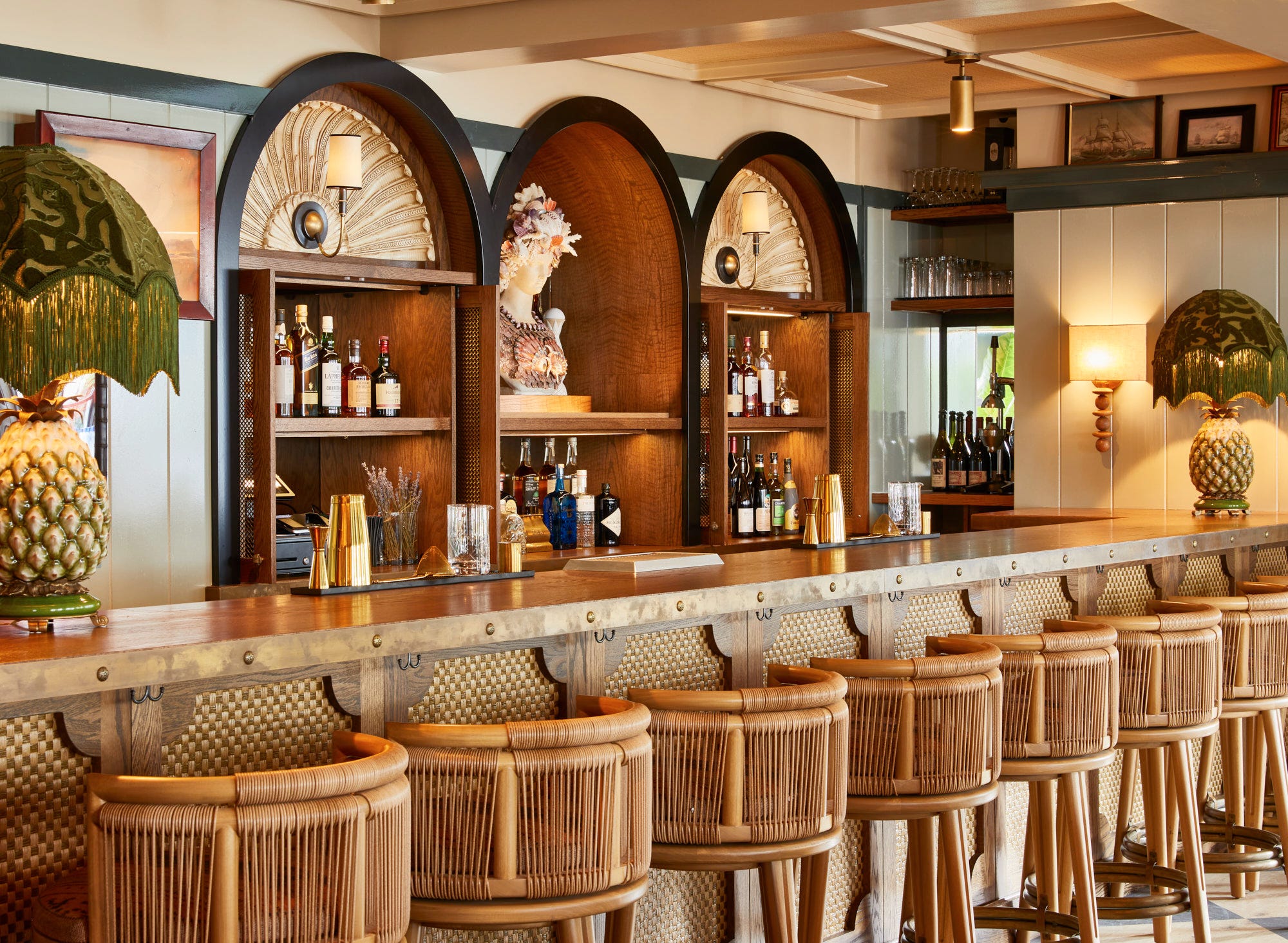
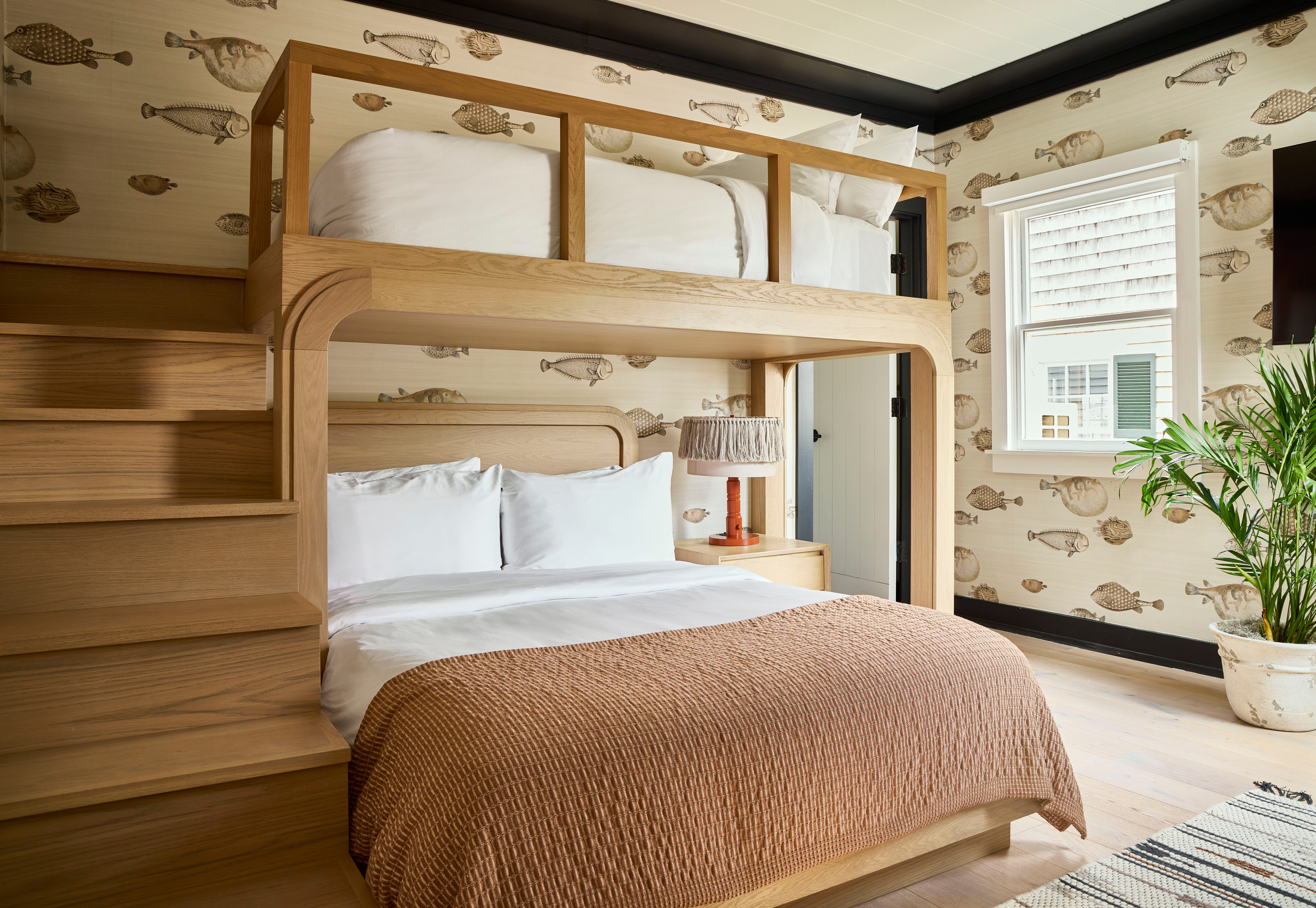
The level of detail and thought that goes into the design of each Faraway Hotel is extraordinary. They’re the type of places where you discover something new with every visit (and want to steal ideas to take back home). In an era of cookie cutter design, these places are totally singular. They are the ultimate vacation crash pads. Here, I talk to Guidi and Brown about the magic of shoulder seasons, their mission to rehab legacy properties, and how they approached their first project in the West.
If you had to describe Faraway Hotels in three words, what would they be?
“Transportive, layered, and social. Each property is designed to feel immersive, theatrical, and expressive, with a strong sense of place and an energy that encourages connection and discovery. Each Faraway is remarkably connected to its location.”
Which brands - hotels or otherwise - do you admire and look to for inspiration?
“Kindred brands are design-led and experience-driven. We are inspired by many hotels and hotel brands around the world, some of which include, Chiltern Firehouse, Soho House, Estelle Manor, Faena, and the Greenwich Hotel, each of which creates a strong sense of identity and social energy. Outside of hotels, we’re inspired by brands that build a world around their product, whether that’s in fashion, food, or design, where storytelling and experience are just as important as the offering itself.”
How did you come up with the name? The locations themselves are very much on-the-beaten-path.
“Our first Faraway was on Nantucket. Many people don’t know this, but the name Nantucket comes from the Wampanoag Native American language meaning “faraway land.” Even though Faraway Nantucket is in the heart of town, naming the hotel Faraway seemed like the perfect fit because the brand is all about escape and stepping out of your everyday routine into a different rhythm. Even in the prime locations where our hotels are located, the goal is to create a sense of escape that feels transportive.”
Why did you choose to initially roll out in the Northeast?
“Faraway Nantucket opened in 2021, followed by Faraway Martha’s Vineyard in 2023, and Faraway Sag Harbor in June 2026. These Northeast markets were a natural starting point as they’re legacy leisure destinations with strong built-in demand and a deep sense of identity. While they are seasonal at their core, we’ve seen increasing interest in shoulder seasons and year-round travel, which has informed how we design and program the properties to feel relevant beyond peak summer months. The shoulder seasons are magical on these island—the crowds have thinned out, the weather is perfect, and the vibrancy of the locations is on fully display.”
What inspired the foray into the West and how did you decide on Jackson Hole as your first outpost out West?
“Expanding West was a natural next step as we looked to bring the Faraway brand into new types of destinations. Jackson Hole stood out as one of the most iconic year-round leisure markets in the country, with a strong mix of outdoor adventure, culture, and hospitality demand. The project is a reimagining of legacy property, Snake River Lodge & Spa and will also eventually include the reimagining of the Alpenhof Lodge. This aligns with our approach of thoughtfully restoring and reinterpreting properties that are storied with a strong connection to place.”
The East Coast properties have a similar design vibe. How did you think about the design for Jackson Hole?
“Faraway Jackson Hole is designed as a modern alpine basecamp, equally suited for winter and summer. From a design perspective, we looked at the property much differently than the other hotels nearby and captured the signature Faraway layered aesthetic through a Teton mountain lens. This was our first foray in a non-coastal town so creating this new aesthetic was quite thrilling. We didn’t want to open another ‘mountain modern’ hotel - we wanted this hotel to feel strikingly different but also truly Jackson.”


What experiences can guests expect from Faraway Jackson Hole?
“Guests can expect a mix of outdoor adventure and social, design-forward spaces, from skiing and hiking to gathering at Sure Hand, the hotel’s restaurant and bar, or spending time in the indoor-outdoor pool, hot tub, and sauna. As with all Faraway properties, there’s a focus on creating a rhythm to the stay where guests move between experiences naturally and feel connected to the landscape around them.”
What commonalities tie the properties together in terms of F&B, experiences, and design?
“Across all Faraway properties, there are a few consistent threads. Each hotel is rooted in a strong narrative and sense of place, expressed through layered, design-forward interiors and thoughtful details. Food and beverage are always central to the experience, designed as a destination in its own right rather than just an amenity. And from an experiential standpoint, we focus on creating a guest journey that engages the senses through atmosphere, programming, and moments of discovery, all while maintaining a social, welcoming energy that brings people together.”